
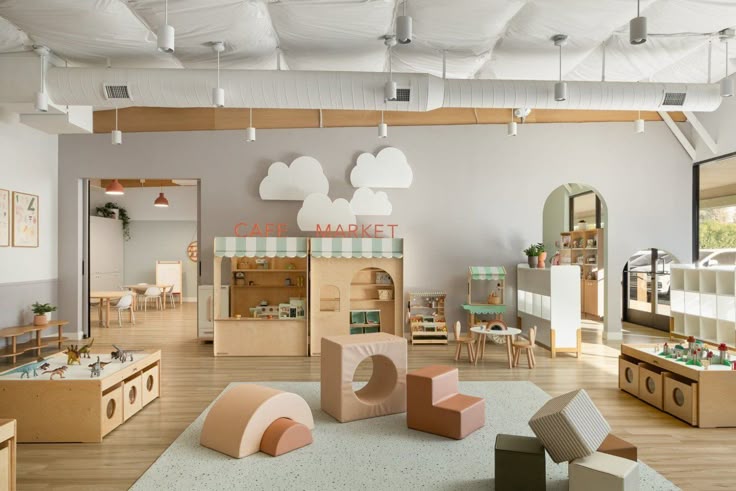
Modern Daycare Interior Design converts the spaces into colorful, purposeful, secure places. First impressions do count, particularly to children and parents. Thus, it is necessary to include a friendly and thought-provoking atmosphere. The modern daycare designs are creative and functional to favor learning and development. In addition, intelligent designs promote social and mental growth. The parents are confident, and the children are in their positions. Notably, the correct design entails a combination of beauty and security. Contemporary daycare interior is not only decoration but also a building block for early childhood. Additionally, professional advice makes each corner meaningful and exciting.
Creating Modern Daycare Interior Design for Children.
In the Modern Daycare Interior Design, creativity is very important. All the classrooms, playgrounds, and busy areas should accommodate the needs of the children. Also, open plans improve mobility and oversight. Transitional zones between learning and play areas ease off on finance. As such, the modern daycare designs frequently comprise mobile furniture and modular patterns. Light-colored colors, together with natural light, enhance mood and concentration. A daycare interior designer makes sure that all the components favor development. Each element, be it safe furniture or interactive walls, has its purpose. Moreover, sensory-friendly corners help children control their emotions. Fun and functionality are combining in an effective design.
The Modern Daycare Interior Design Job.
The whole process, including the concept and execution, is guide by an daycare interior designer. They put your space, aims, and funds through the test. Additionally, they propose furniture, color patterns, and layouts that are most likely to be functional. A change from ordinary to modern daycare designs cannot happen without expertise. Designers implement evidence-based interventions, which enhance engagement. As an instance, reading nooks and creative stations are located in strategic places. They also make sure the safety codes and accessibility standards are met. The upshot is the ability of children to explore safely as they gain critical skills. Can you work with a professional? It will save time, minimize the number of mistakes, and improve the total atmosphere.
Integrating Contemporary Daycare Designs.
Themed areas also promote fantasy play. As an example, reading sections, mini-kitchens, or pretend play zones is natural for stimulating learning. Moreover, the use of storage facilities helps to keep things clean and maintain order. There is less difficulty in the change between the areas, and children can move freely. They are through technology integration, interactive boards or tablets, which improve learning experiences. These designs, too, are accommodating to special requirements, enabling sensory-friendly environments for all children. Finally, the designs of the modern daycare are a compromise of aesthetic, functionality, and developmental advantages.
Improving Safety and Comfort.
The interior design of daycare places safety on top of the list. Protection of children is done through round furnishings, tough flooring, and secure play equipment. Also, adequate lighting is better to ease strain and improve mood. Comfort and focus is also provided by ventilation and acoustics. The interior designer of a daycare makes sure that all the minutiae are complying. The use of transition spaces is well indicating to avoid accidents. In addition, sensory corners offer a relaxed space for kids who need a break. The interior design of modern daycare does not sacrifice the aspect of safety. Rather, it incorporates the two and molds them into a safe and comfortable learning environment.
Conclusion
The Modern Daycare Interior Design brings child development and parent confidence to a higher level. In the design of innovative designs for tactile spaces, all the features promote development. When dealing with a daycare interior designer, one would be assuring of quality, practicality, and aesthetics. In addition, the current daycare designs promote natural learning, play, and social skills. Considerable design helps to enhance the experiences of children and their engagement. The difference is observable by parents, and the staff will be able to work effectively within planned areas. Finally, the contemporary daycare interior design is not merely about making it look good, but also a key building block to early childhood development. Every minute counts, every inch count, and every child count.